How to Use Compound and Complex Sentences to Improve Writing
To improve writing, one can use compound and complex sentences to add depth and detail. Compound sentences are created by combining two independent clauses with a conjunction such as ‘and’ or ‘but’. For example, ‘I wanted to go outside but it was raining’. This sentence combines two independent thoughts into one sentence.
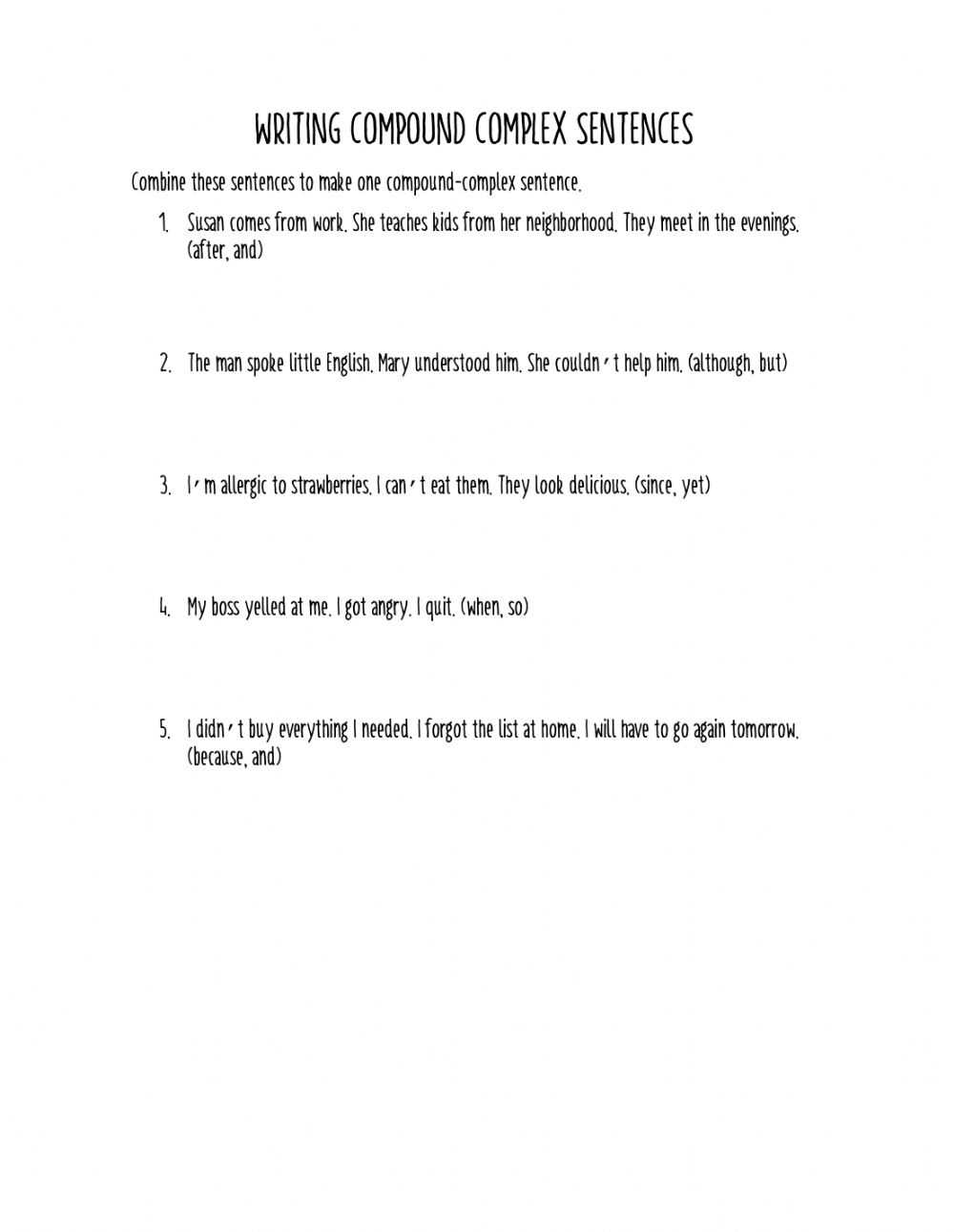
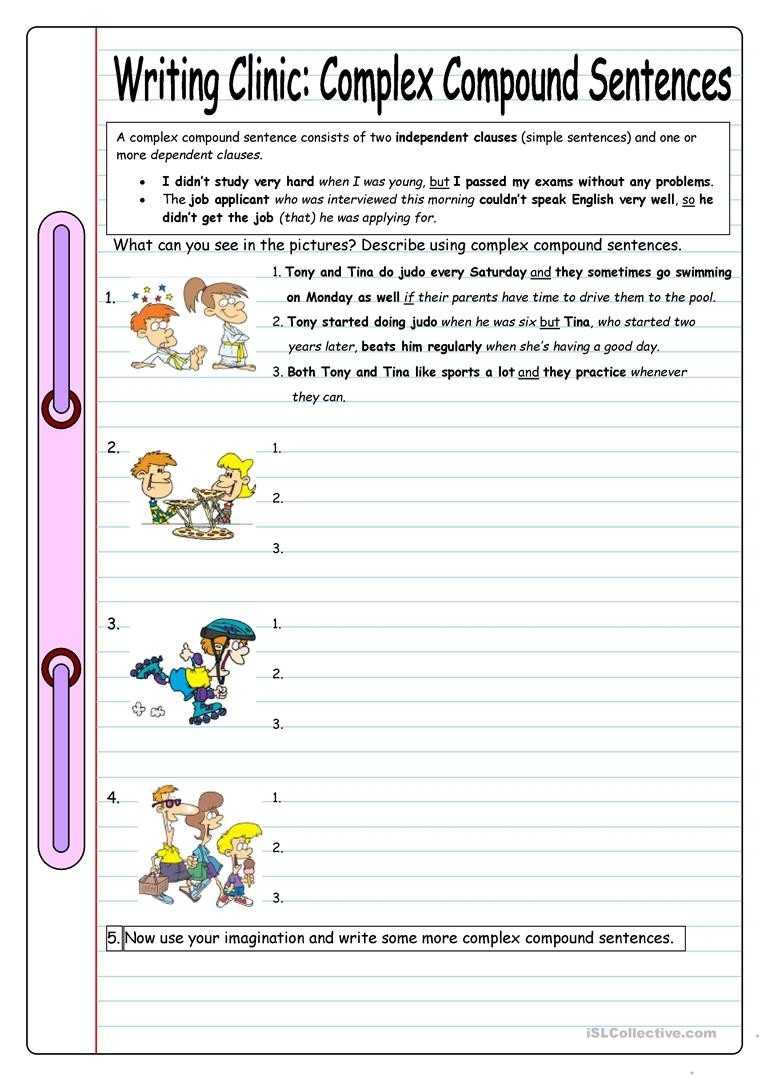
Complex sentences are composed of a main clause and one or more subordinate clauses. Subordinate clauses are dependent on the main clause and cannot stand on their own. For example, ‘Although it was raining, I wanted to go outside’. In this sentence, the subordinate clause ‘Although it was raining’ is dependent on the main clause ‘I wanted to go outside’.
Using compound and complex sentences can help to create more descriptive and varied writing. These sentences can be used to elaborate on ideas, add detail, and create a more formal writing style. Through the use of compound and complex sentences, one can effectively communicate their ideas in a sophisticated manner.
[toc]
Understanding Compound and Complex Sentences: A Comprehensive Worksheet Guide
Compound and complex sentences are two of the most important sentence structures that any writer must master. To ensure that you are able to construct them correctly, a comprehensive worksheet guide is essential. This guide provides an overview of the differences between compound and complex sentences, and it outlines some key strategies for constructing each type of sentence.
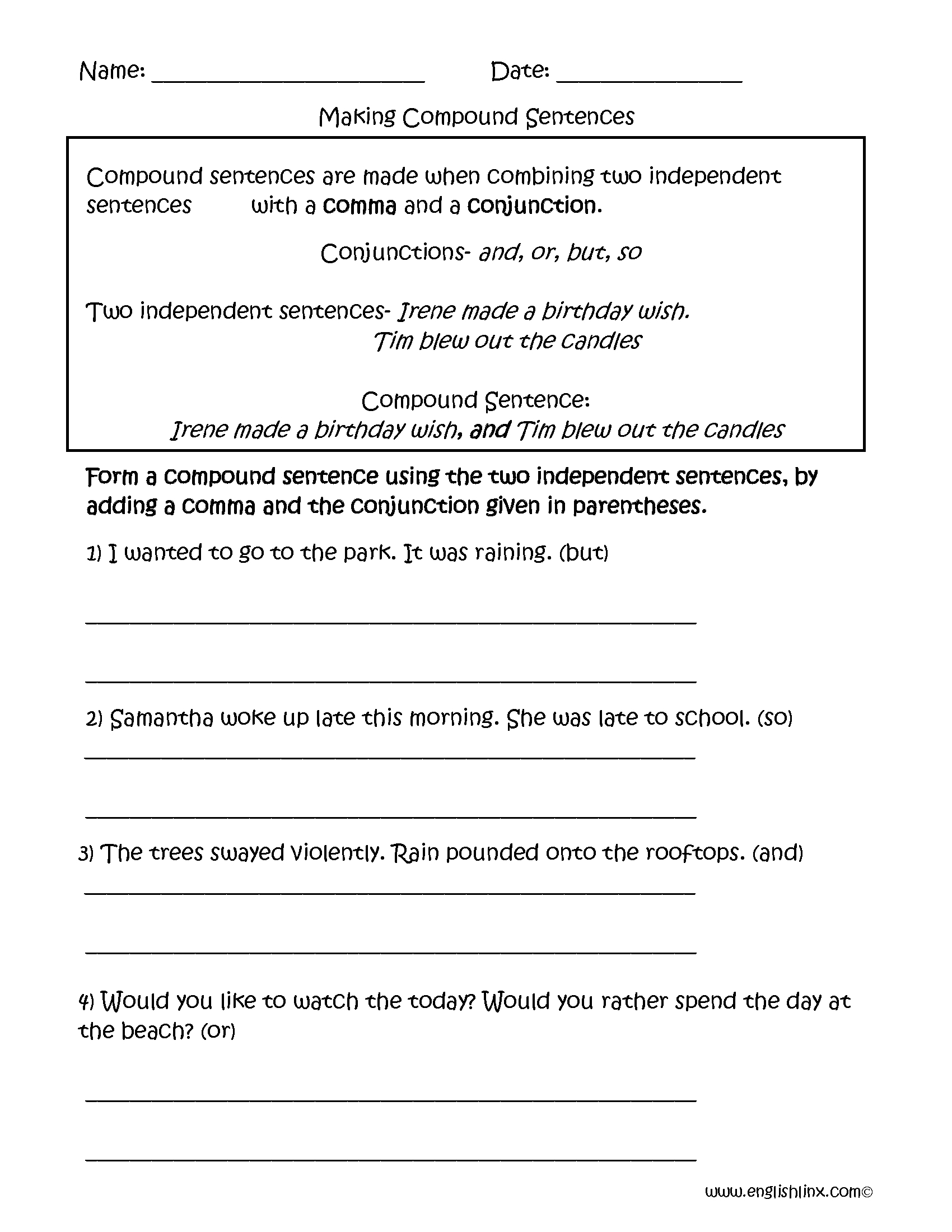
Compound sentences are composed of two independent clauses that are joined together by a coordinating conjunction. The coordinating conjunctions include “for,” “and,” “nor,” “but,” “or,” “yet,” and “so.” The two independent clauses can be joined together in two different ways—either by using a comma before the coordinating conjunction, or by using a semicolon. It is important to note that when using a semicolon, there should not be a coordinating conjunction.
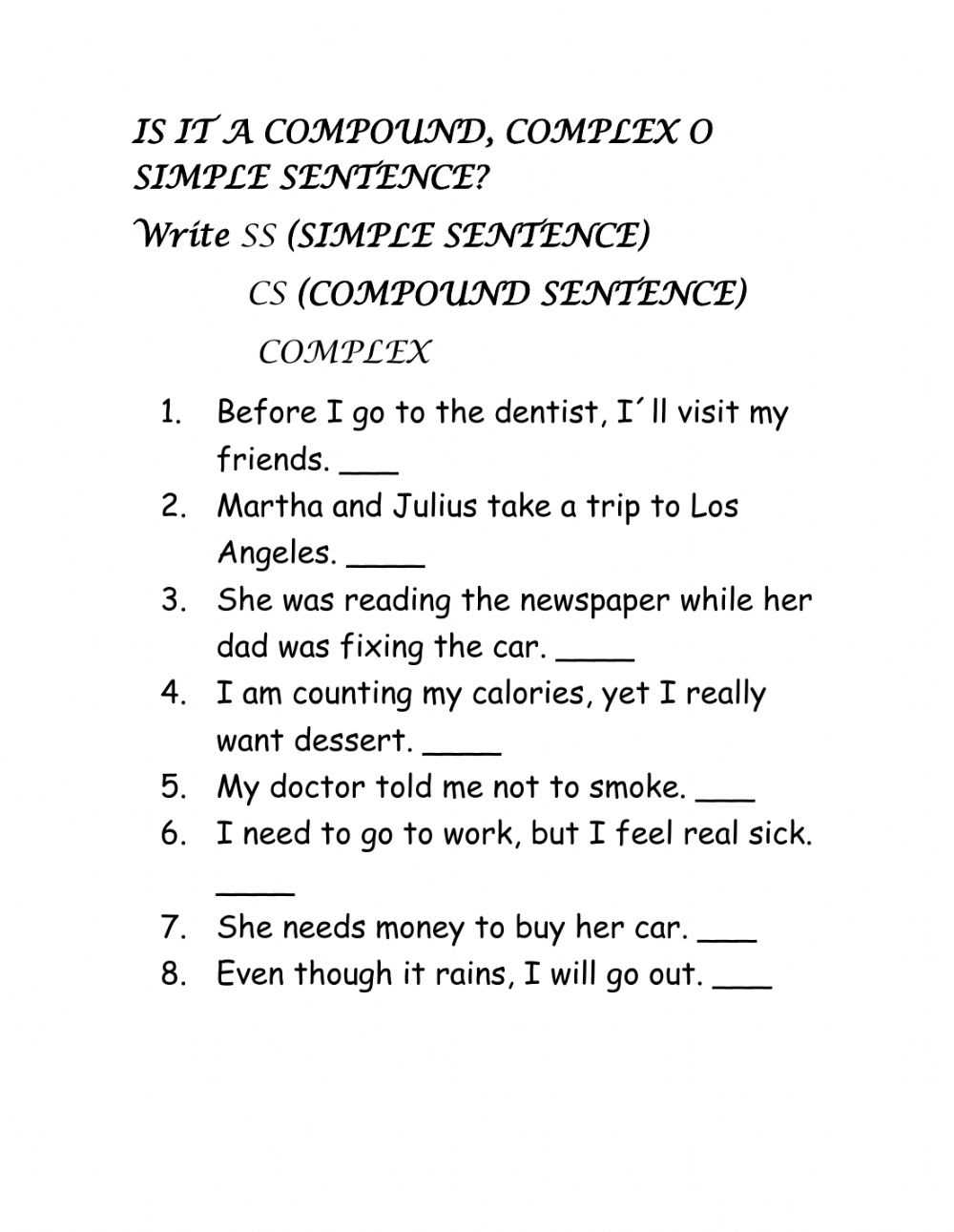
Complex sentences, on the other hand, are composed of one independent clause and one or more dependent clauses. Dependent clauses cannot stand alone as sentences, and they are usually joined to independent clauses by a subordinating conjunction. Subordinating conjunctions include “because,” “although,” “while,” “unless,” “since,” and “if.” There is no need for a comma when joining a dependent clause to an independent clause.
When constructing a compound sentence, it is important to make sure that each independent clause has its own subject and verb. Additionally, it should be noted that the two independent clauses should be about the same thing. If not, the sentence is considered to be a comma splice.
When constructing a complex sentence, the main thing to keep in mind is that the dependent clause should be placed at the beginning or at the end of the sentence. Additionally, the dependent clause should explain why or how the independent clause is true.
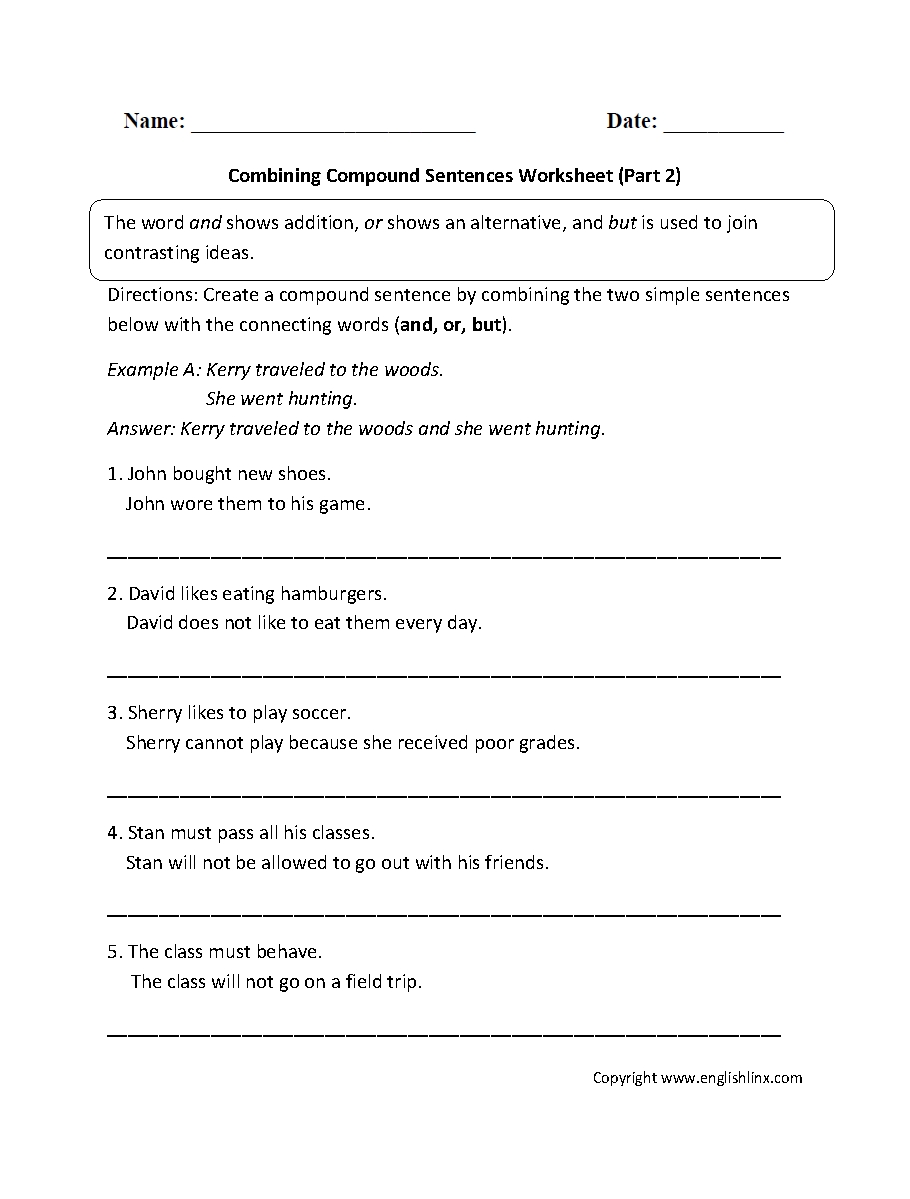
By following the guidelines outlined in this comprehensive worksheet guide, you should be able to construct compound and complex sentences with ease. With practice and patience, you will soon be able to confidently combine two or more clauses into a grammatically correct sentence.
Exploring the Benefits of Using Compound and Complex Sentences in Writing
Compound and complex sentences have the potential to add depth, color, and nuance to writing. By combining two or more shorter sentences into a single sentence, writers can create more intricate and nuanced descriptions. These structures also add rhythm and pacing to sentences, which can help to draw readers into the text and keep them engaged. Furthermore, by using compound and complex sentences, writers can quickly convey a great deal of information in a single sentence. This can be useful in situations where the author needs to quickly move the story along or provide a great deal of detail in a limited amount of space.
In addition to the benefits they provide to writing, compound and complex sentences also require writers to think more deeply about their subject matter. By having to combine multiple ideas into a single sentence, they must carefully consider how they want to express their thoughts. This can lead to a greater understanding of the material and greater creativity in how it is expressed. Finally, these sentences provide an opportunity to employ a greater variety of grammar structures and creative language in one’s writing, allowing the author to craft a unique and distinct style.
In conclusion, compound and complex sentences can be a powerful tool for writers who wish to add depth, clarity, and nuance to their writing. Not only do they provide the opportunity for more detailed and nuanced descriptions, but they also require the writer to think more deeply about their material and can result in greater creativity. Additionally, these sentences can help to create a unique and distinct writing style.
Tips for Crafting Effective Compound and Complex Sentences in the Classroom
1. Encourage students to use varied sentence structures. To further challenge students, suggest that they use compound and complex sentences when crafting narrative stories or expository essays.
2. Model the use of compound and complex sentences in lessons by reading aloud examples from a variety of texts.
3. Guide students through the process of creating compound and complex sentences by dissecting simple sentences into two or more shorter clauses.
4. Provide students with practice opportunities to craft their own compound and complex sentences. Suggest that they use the sentences to describe a scene or setting, or to explain a concept or idea.
5. Offer students feedback and guidance on their own writing. Encourage them to focus on varying sentence length and structure, and to use appropriate conjunctions and punctuation.
6. Explain the importance of using compound and complex sentences, and the impact that these sentence structures can have on readers. Point out how these sentences can help to create a richer and more vivid narrative.
Creative Exercises to Teach Compound and Complex Sentences
Compound and complex sentences are an essential component of effective writing. To teach students how to construct these sentences, creative exercises can be used to help them develop their skills.
One exercise to teach compound sentences is to provide the students with a series of words or phrases. Ask them to arrange the words into a compound sentence. For example, if the words provided are “I went to the store, but I didn’t buy anything,” the student should be able to form the sentence, “I went to the store but didn’t buy anything.”
A second exercise which can be used to teach complex sentences involves giving students some sentence starters and having them complete the sentences. For example, if the sentence starter is “Although I was tired,” the student should complete the sentence with an explanation of what they did despite being tired. This could include something like, “Although I was tired, I stayed up late to finish my essay.”
Finally, a third exercise that can be used to teach compound and complex sentences is to provide students with a story outline and having them write the story in the form of compound and complex sentences. This encourages them to use their imagination and think critically about how to construct their sentences.
By incorporating these creative exercises into the classroom, students can be taught the importance of compound and complex sentences and gain the skills necessary to construct them.
Analyzing Compound and Complex Sentences: A Step-by-Step Worksheet Guide
Step 1: Identify the Sentence Type
To begin analyzing a sentence, you must first identify the type of sentence you are dealing with. Is it a compound sentence, a complex sentence, or a combination of the two? A compound sentence is two independent clauses that are joined together with a coordinating conjunction such as “and,” “but,” “or,” or “so.” A complex sentence is an independent clause that is joined with one or more dependent clauses.
Step 2: Break Down the Sentence
Once you have identified the type of sentence, the next step is to break down the sentence into its individual components. Compound sentences should be broken down into two independent clauses, while complex sentences should be broken down into one independent clause and one or more dependent clauses.
Step 3: Identify the Subject and Verb
Next, you should identify the subject and verb of each clause. This is important for determining the main idea of the sentence and for analyzing the structure of the sentence.
Step 4: Identify the Connecting Words
In a compound sentence, you should look for the connecting words that join the two independent clauses together. These are typically coordinating conjunctions such as “and,” “but,” “or,” or “so.” In a complex sentence, you should look for the subordinating conjunctions such as “because,” “although,” or “while.”
Step 5: Analyze the Meaning
Finally, you should analyze the meaning of the sentence by considering what each clause and connecting word is expressing. This will help you understand the overall meaning of the sentence and how the two clause are related.
Exploring the Different Types of Compound and Complex Sentences
A compound sentence is one composed of two or more independent clauses that are related in meaning. These clauses are joined by a coordinating conjunction such as “and” or “but”. For example, “I went to the store, and I bought some food.”
A complex sentence is one composed of an independent clause and one or more dependent clauses. These clauses are connected using a subordinating conjunction such as “although”, “because”, or “while”. For example, “I went to the store while my friend stayed home.”
Both compound and complex sentences are used to express ideas and make writing more interesting. Compound sentences emphasize the connection between two related ideas, while complex sentences provide additional information and context. Additionally, these sentences can be used to create a specific tone and style in a piece of writing.
In conclusion, compound and complex sentences are both important components of writing. They help to express ideas in a clear and organized way, and can be used to create a specific tone and style. Understanding the differences between these two types of sentences can help writers craft effective and compelling pieces of writing.
Strategies for Identifying Compound and Complex Sentences in Texts
1. Carefully read through the text and identify any sentences that contain more than one independent clause. An independent clause is a group of words that contains a subject and a verb and expresses a complete thought. Compound sentences consist of two or more independent clauses connected by a coordinating conjunction (for, and, nor, but, or, yet, so).
2. Look for sentences that contain multiple ideas connected together by subordinating conjunctions. Complex sentences are composed of one independent clause and one or more dependent clauses, which are introduced by subordinating conjunctions (such as if, although, because, while, etc.).
3. Pay attention to punctuation. A compound sentence will be separated by a comma and a coordinating conjunction, while a complex sentence will be separated by a subordinating conjunction.
4. Examine the structure of the sentence. Compound sentences are typically parallel in structure, meaning that the two independent clauses are of similar length and the same grammatical structure. Complex sentences, on the other hand, contain one independent clause and one dependent clause, which is usually shorter than the independent clause.
5. Re-read the sentences to check for clarity. Compound and complex sentences can be difficult to identify since they are made up of multiple clauses. To be sure that a sentence is a compound or complex sentence, it should be clear that two or more ideas are being expressed.
Tools for Assessing Compound and Complex Sentences in Student Work
1. Readability Metric Tools: Readability metrics are tools that measure the complexity of a sentence, allowing instructors to assess the comprehension level of student work. Readability metrics can measure sentence length, word complexity, and syntactic complexity. These metrics can help instructors quickly identify complex sentences in student work, allowing for more efficient feedback.
2. Sentence Diagramming Tools: Sentence diagramming tools are a visual representation of a sentence, allowing instructors to identify the components of a sentence and analyze its structure. Sentence diagramming can provide instructors with an easy way to assess the structure and complexity of compound and complex sentences in student work.
3. Digital Writing Tools: Digital writing tools are software programs that provide feedback on the structure, organization, and content of student work. These tools can help instructors identify complex sentences in student work, as well as assess the clarity and flow of the writing.
4. Grammar Checkers: Grammar checkers are automated tools that assess the grammar, punctuation, and spelling of student work. Grammar checkers can help instructors identify complex sentences, as well as detect errors in usage and mechanics.
Strategies for Teaching Compound and Complex Sentences to English Language Learners
When teaching compound and complex sentences to English language learners, it is important to begin by introducing the fundamentals. Start with the basics such as the definition of a sentence and then move on to the definition of a compound and complex sentence. Utilize visuals such as diagrams and photos to show the difference between a simple, compound and complex sentence.
Next, have students practice constructing their own sentences using the target language. This can be done through sentence writing activities and sentence puzzles. Additionally, use sentence frames to help students understand how to create a compound or complex sentence. For example, provide a sentence frame such as “I went to the store, and then ____” and have students fill in the blank with a complete sentence.
It is also beneficial to have students read examples of compound and complex sentences and discuss the structure and meaning. Provide a variety of texts that include both simple and compound and complex sentences, and have students identify which type of sentence each is.
Finally, provide students with opportunities for creative writing activities. Have them write stories or poems using compound and complex sentences. Offer feedback and guidance as needed. Through practice and repetition, students will become more confident in their ability to identify and construct compound and complex sentences.
Conclusion
The Compound and Complex Sentences Worksheet is an effective way to help students learn the basics of sentence structure. It provides practice in identifying the different types of sentences, understanding the difference between the two, and constructing sentences with both. With regular practice, students can become more confident in their writing and be able to construct complex sentences with ease.
[addtoany]
5 photos of the "Compound And Complex Sentences Worksheet"
Related posts of "Compound And Complex Sentences Worksheet"
Dna The Double Helix Worksheet
Exploring the History of the Discovery of the Double Helix: A Look at the Famous DNA WorksheetThe discovery of the double helix of DNA is one of the most famous scientific achievements of the twentieth century, and its story is one of remarkable insight and collaboration. In 1953, the world of biology was revolutionized with...
Adding And Subtracting Radicals Worksheet
Understanding the Basics of Adding and Subtracting Radicals with a WorksheetAdding and subtracting radicals is an important skill for algebra and other higher-level mathematics courses. Understanding the basics of working with radicals is essential for mastering complex equations. To help students develop a strong understanding of the fundamentals of adding and subtracting radicals, a worksheet...
Renewable And Nonrenewable Resources Worksheet
Assessing the Benefits and Drawbacks of Renewable and Nonrenewable Resources WorksheetsRenewable Resources Benefits: Renewable resources, such as solar, wind, water, and biomass, provide a sustainable source of energy that can be used to power homes, businesses, and even entire cities. These renewable resources are also much more environmentally friendly than their nonrenewable counterparts, producing little...
Cell Organelles Worksheet Answer Key
Exploring Cell Organelles with a Worksheet Answer KeyCell Organelles Worksheet Instructions: Label the diagrams of the cell organelles below and answer the questions that follow. 1. Cell Membrane: This organelle is a thin, flexible barrier that surrounds the cell. It is made up of a phospholipid bilayer and proteins and controls the movement of molecules...